
What a Coven Should Teach You to Notice

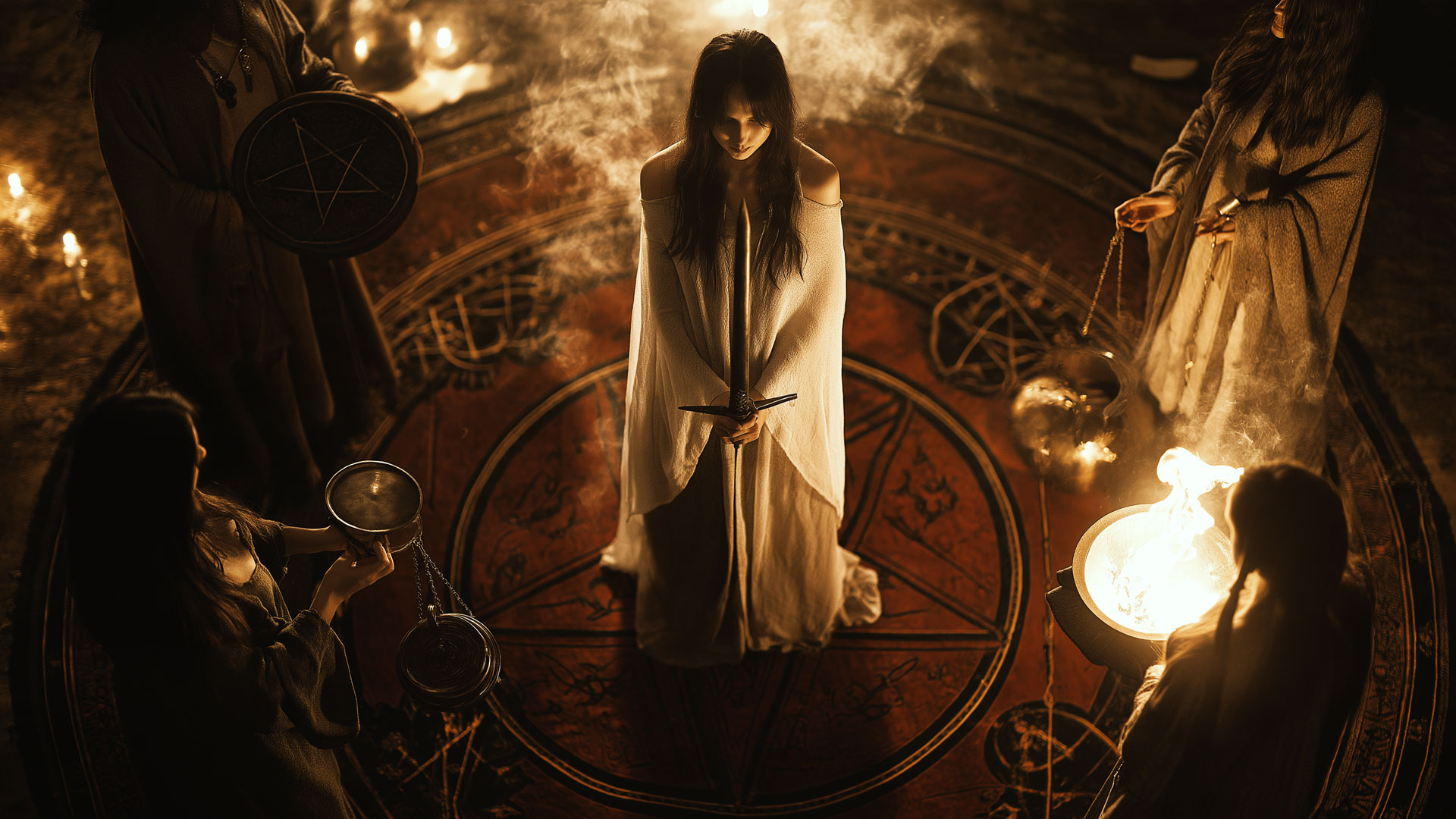
When I place the ritual Sword into a newcomer’s hands, there is often a small look of surprise.
It is heavier than they expected.
They may already know what a sword represents in Witchcraft. They may have read about Will, boundaries and the casting of sacred space. Now they have to hold the thing, speak the words and pass it carefully to the person beside them.
The symbolism has acquired weight.
That small moment contains something important about coven life. We arrive with ideas about the Craft. Practice gives those ideas something to do.
For someone seeking a coven, much attention naturally falls upon the threshold. How do I find one? Will they accept me? What happens at initiation?
Those questions matter. But there is another worth bringing into the room: what will working with these people help me learn to notice?
Across the Coven Life series, that question has become increasingly important to me. It concerns practical competence, certainly, but also the attention through which ritual becomes experience—and the relationships that allow us to enter it more deeply.
Learning to notice the whole Circle
At first, a newcomer’s attention is understandably occupied with themselves. Where do I stand? What comes next? Have I forgotten the response?
Repetition gradually changes this.
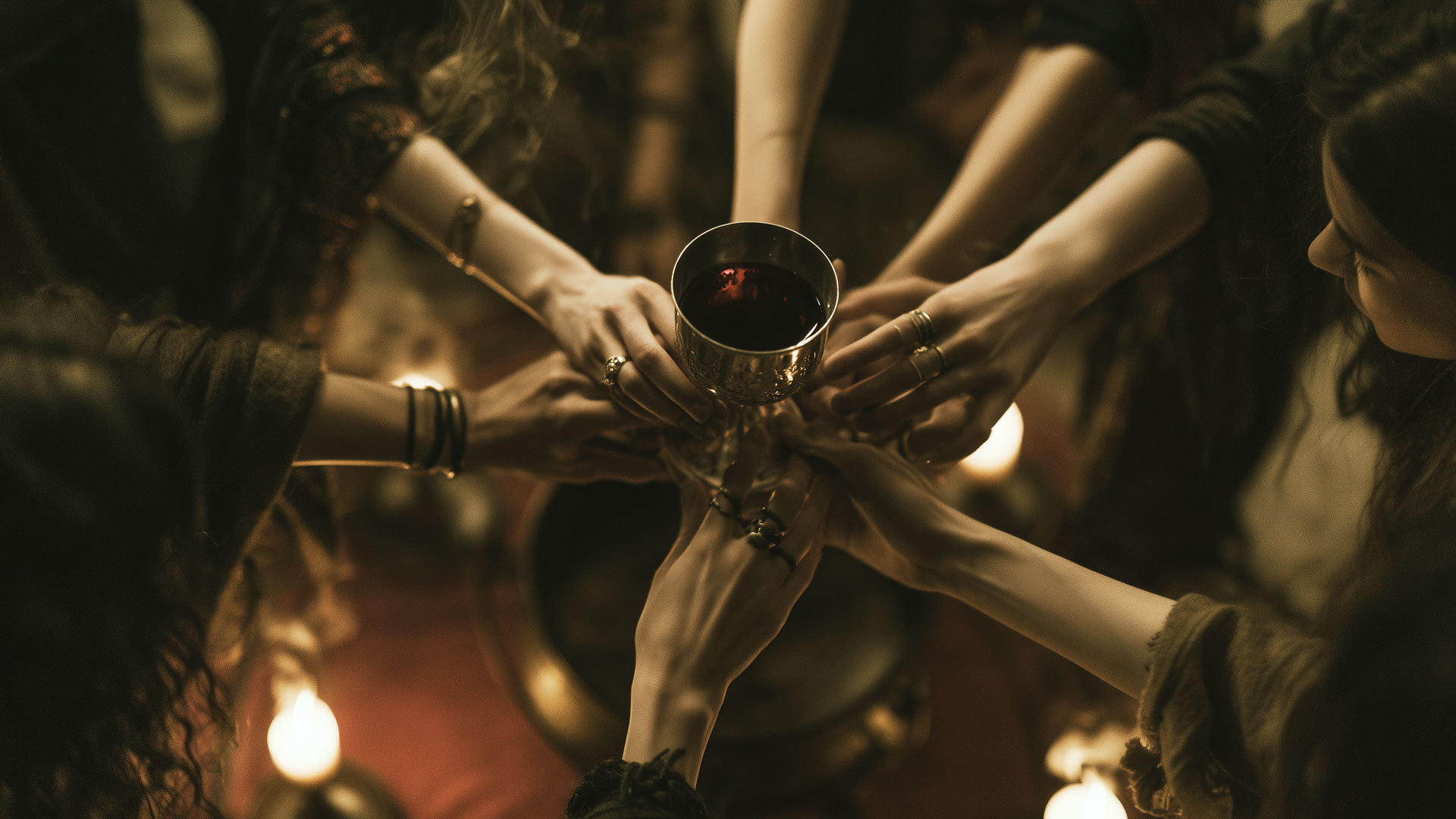
The body learns how to receive the chalice, where breath belongs in a chant and how to move without disrupting the people nearby. These things become familiar enough that attention can begin travelling beyond the next instruction.
You hear that the chant needs support. You notice someone struggling with an unfamiliar passage. You recognise that a silence ought to remain undisturbed for a little longer.
Eventually, the question changes from What am I supposed to do? to... What needs doing?
That is one of the quieter thresholds of apprenticeship.
It also opens the way towards the psychic dimensions of the Work. When every movement requires conscious supervision, there is little attention left for atmosphere, sensation or the images arising within us. As the form becomes familiar, we can enter it more fully.
A chant may acquire a resonance we had not expected. The room may seem to change. Something encountered in ritual may return later in a dream.
Such experiences deserve attention without requiring an immediate verdict about what they mean. Learning to distinguish observation from interpretation is itself part of the Craft.
For the seeker, then, participation involves more than being given something to hold. Look for opportunities to observe, attempt, reflect and gradually understand why the work unfolds as it does.
You need not arrive already competent. There should be somewhere for your competence to grow.
What trust makes possible
In Part Four, I recalled an evening when Leonie joined Nuit’s Veil for a Full Moon rite.
We had spent the afternoon wandering around Newtown, talking about Witchcraft and people we had known. Nothing in those conversations prepared me for what she told us afterwards, while we were still sitting together following the ritual.
She had just buried her father.
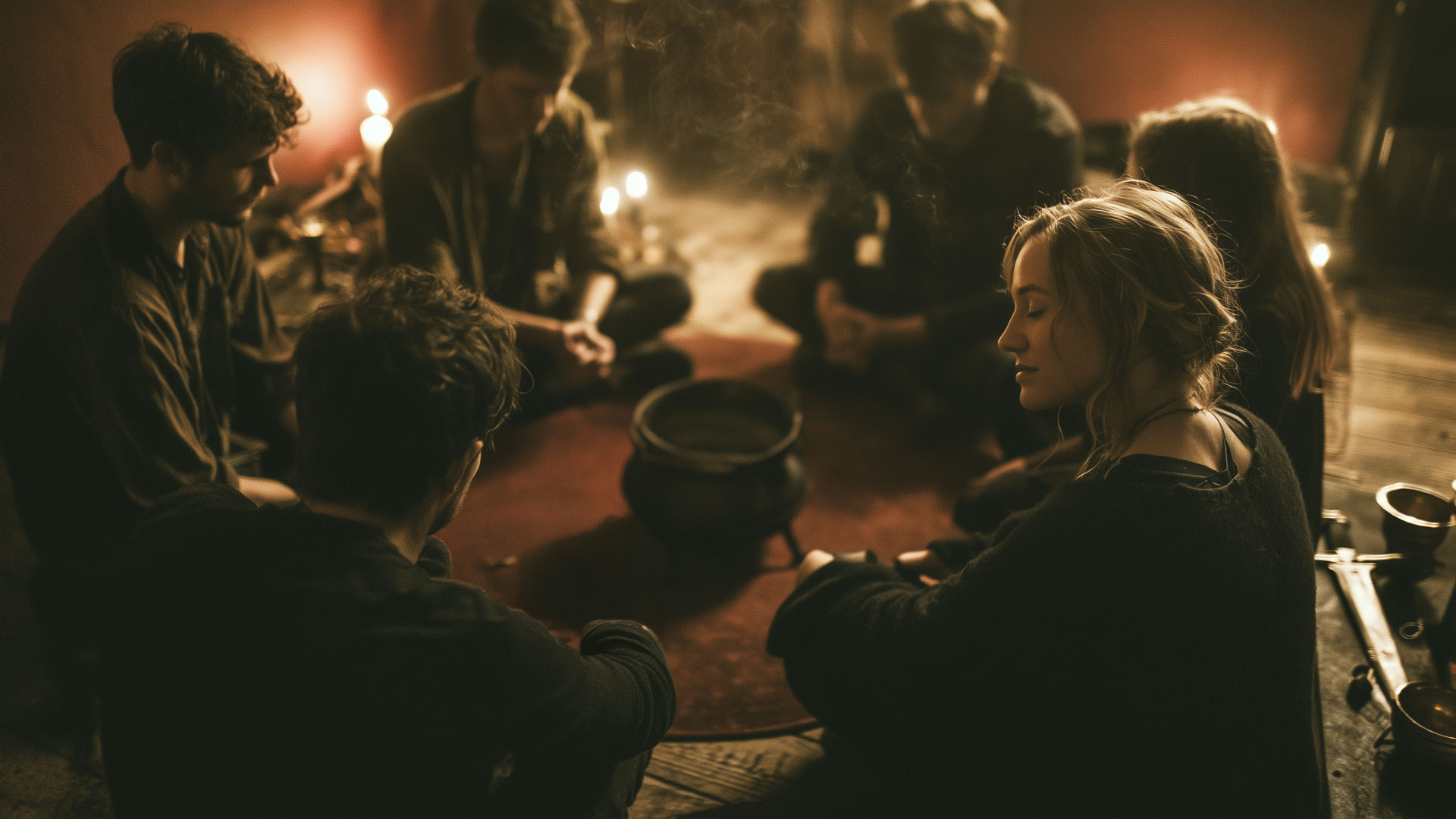
Nobody attempted to turn her grief into a convenient magical teaching. We moved towards her, put our arms around her, and the tears came.
The ritual had not removed her loss. For a little while, however, she did not have to carry it alone.
I remember that evening because it showed me something about the relationships through which a Circle becomes capable of holding deeper experience. Leonie spoke when she was ready. Our responsibility was to receive what she offered.
Trust develops through such moments, and through much smaller ones: a confidence kept, a boundary accepted, an embarrassing mistake handled kindly. Gradually, people acquire reasons to relax their guard.
That has a direct bearing on magical practice.
If I am wondering whether something I disclose will become tomorrow’s gossip, part of my attention remains occupied with self-protection. If I trust the people around me, more of that attention becomes available for the Work.
I can close my eyes during trance. I can allow the chant to carry me. I can describe an experience honestly, including admitting that nothing much happened.
Trust frees attention.
Clear boundaries help make that possible. Knowing that I can decline a practice gives greater meaning to my willingness to enter another. Being able to ask for space allows me to choose closeness.
When considering a coven, notice how these ordinary choices are received. They tell you something about how much of yourself you may eventually feel able to bring into the Circle.

A teacher who leaves room for your judgement
There is a responsibility here that belongs particularly to the teacher.
I can place a censer in your hands while keeping every meaningful decision in mine. You carry Air; I choose the working, determine its pace and explain afterwards what everybody experienced.
Close guidance may be entirely appropriate at the beginning. Eventually, though, an apprentice needs access to the reasoning behind the action.
Why did we continue that chant? What suggested that the group needed grounding? What did you notice?
Those conversations allow another person’s discernment to develop. They also require the teacher to accept that someone else may notice something we missed.
I have occasionally needed reminding that what travels onward through other people will not remain entirely under my control.
At a retreat in Sydney, Zac, one of my early Adelaide initiates, invited me to watch his coven demonstrate a ritual. Almost immediately, I recognised words I had devised more than twenty years earlier.
I cringed.
They were teaching mnemonics—training wheels, as I understood them. I had long since moved on. Zac and his coven, meanwhile, performed them with considerable enthusiasm.
I wanted to show them what I used now.
But there was a lesson inside my embarrassment. I thought I had passed on an exercise. Zac had received a tradition.
A teacher does not have the final word on everything another person finds valuable.
For the seeker, this raises a useful question about apprenticeship. Will this group help you understand the Craft deeply enough to develop your own judgement? Is there room to ask why, to compare experiences, and eventually to contribute something the teacher did not supply?
That takes time. It also takes teachers willing to remain students of what happens in their own Circles.
The deeper promise of coven life lies in what people may gradually become capable of doing together. Several voices find a current that one voice could not sustain. Experience becomes available for comparison. Someone else’s question reveals a gap in our understanding.
We learn to notice more.
So, alongside asking whether a coven has a place for you, consider this: how might working with these people change the quality of your attention—to the Craft, to others and to yourself?
That is an apprenticeship worth exploring.
The Coven Life series follows that exploration through participation, trust, leadership, conflict and the living traditions we eventually carry onward.

A closer look inside the coven
If you’d like to explore the inner life of a coven in greater depth, my book Anatomy of a Witches’ Coven: Coven Work as an Alchemical Vessel — Power, Structure, and Transformation in Witchcraft takes these questions further.
I examine what develops between people through sustained magical practice: trust and intimacy, authority and projection, conflict, and the pressures that can deepen the Work or fracture the group. The alchemical vessel gives us a way to understand both the intensity of coven life and the structure needed to hold it.
Comments